
I don’t know much about the gunman Shane Tamura. From what I gather, he was a ‘normal’ dude:
“Now, his former teammates are speaking out after learning Tamura is accused of the killings.
One teammate described Tamura as a “goofball.”
Another, who didn’t want to be identified, said Tamura was a good guy.
“He was a great teammate. He was a great guy in general. He didn’t cause any problems actually at all in the locker room or on the field,” he said. “He was just a guy who really enjoyed the sport, not problematic at all so when I found out the news, I was really shocked, I really couldn’t believe it.”
There are also reports that one of Tamura’s parents may have been a retired Los Angeles Police Department member.”
I don’t know how in roughly 9 years you go from THAT to this.

Now, I know what the general reaction is
‘Oh, here we go again, making more excuses for scum…”
But if you only take away ONE lesson from Butch, let it be this:
The more science advances, the more causes [not excuses] are discovered.
This might terrify some who TOTALLY believe in absolute free will, but you can’t WILL yourself out schizophrenia, borderline personality, dementia or Alzheimers.
If you were to time travel to the medieval ages and yell, “Stop! She’s not a witch! She’s just a paranoid schizophrenic who needs meds!”
They would burn YOU at the stake next to her.
When I was in college, I read a story about Phineas Gage.
Probably the most famous person to have survived severe damage to the brain. He is also the first patient from whom we learned something about the relation between personality and the function of the front parts of the brain[…]Some months after the accident [a rod through brain], probably in about the middle of 1849, Phineas felt strong enough to resume work. But because his personality had changed so much, the contractors who had employed him would not give him his place again. Before the accident he had been their most capable and efficient foreman, one with a well-balanced mind, and who was looked on as a shrewd smart business man. He was now, Harlow said, fitful, irreverent, and grossly profane, showing little deference for his fellows. He was also impatient and obstinate, yet capricious and vacillating, unable to settle on any of the plans he devised for future action. His friends said he was “No longer Gage.”
So what happened to poor old Phineas? He just “decided”, coincidently, one day to totally devolve?
No, much more likely is sections of the brain that contained parts of “Phineas” shot out of his skull with that rod never to return.
It’s a bit macabre to think about, but we also see this in the lobotomized.
You can’t just snap out of a lobotomy.
It’s almost self-evident now that definite parts of the brain contain more than we assumed to the point where identities can alter drastically.
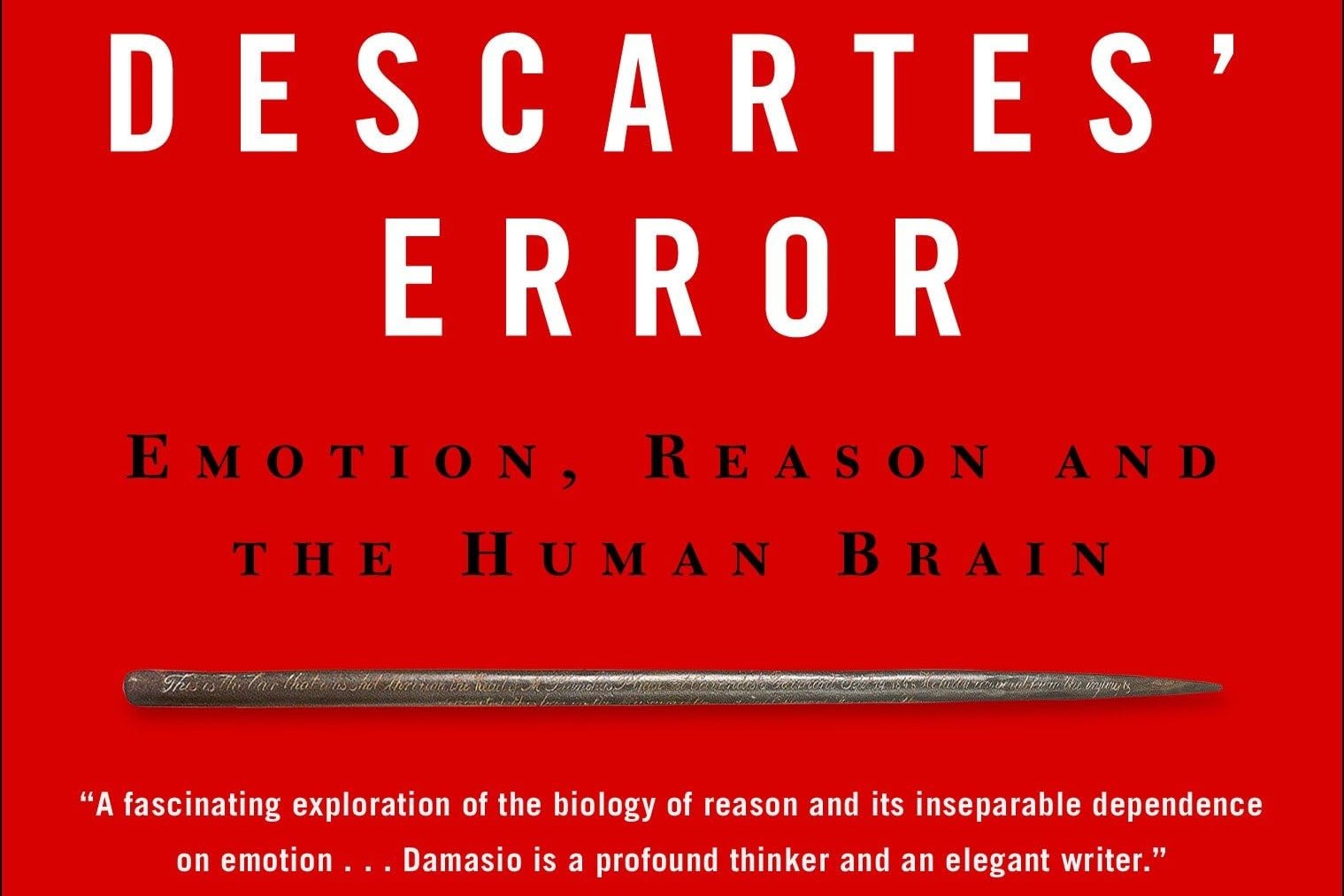
And if I took ONE thing from Antonio Demasio’s book “Descartes’ Error,” it’s that a WHOLE LOT more ppl than imagined might be walking around with a degree of brain damage [insert jock, celebrity and politician joke here].
If you google, “behavioral symptoms of CTE” this appears.
Behavioral symptoms of Chronic Traumatic Encephalopathy (CTE) can include aggression, impulsivity, depression, anxiety, mood swings, and personality changes. These symptoms can significantly impact an individual’s behavior and relationships. Additionally, some individuals may experience suicidal thoughts or engage in erratic behavior
And as we have sadly seen in Junior Seau, Dave Duerson, et al, CTE can indeed change a person irrevocably and tragically.
Or as the NYT wrote:
What scientists — from such diverse fields as psychiatry, neurology and substance use — can say is that the arrows seem to be pointing in the same direction. A number of brain states raise the risk of acting out violently, and the evidence so far, while incomplete, suggests that C.T.E. may be one of them.
Dr. Samuel Gandy, director of the N.F.L. neurology program at Mount Sinai Medical Center, said his research showed that rage and irritability “are far and away the most prominent symptoms” among former players with likely C.T.E.
The tricky part comes when crime enters the formula as with Aaron Hernandez, Kellen Winslow and possibly Shane Tamura as correlation may not equal causation.

A combination of photos showing sections from a normal brain, top, and from the brain of former University of Texas football player Greg Ploetz, bottom, who had Stage IV chronic traumatic encephalopathy, or C.T.E. An autopsy of former New England Patriots tight end Aaron Hernandez revealed severe C.T.E.
Credit…Ann Mckee/Boston University, via Associated Press
So where does this leave us as football fans?
Well, pretty fucking confused since many of us aren’t neurologists, psychiatrists, biologists or epistemologists, and even they’re still sorting it out.
As of now, we don’t even know if the gunman actually suffered from severe CTE while the NFL is trying to paint him as a barking moon lunatic.
However, for a nut, Tamura sure found a rather NICHE cause to fly over the coocoo’s nest, and given some previous social media posts from him, he had to devolve relatively quickly.
I suppose I’ll just keep my antenna up on the subject and see where it goes. It could lead me to sadly quit watching the NFL if the data keeps getting worse.
However, medicine advances at seemingly warp-speed; maybe science finds a way to mitigate, or drastically minimize, concussions and CTE.
So for now, I’ll crack open some beers and root for Da Bears to lay clean rib-crushing hits.
Hey, at least I’m not watching bum fights or betting on FanDuel for this…