GP part deux
- Welcome to Hammond, Indiana — Please Watch Your Step (and Your Air Quality)
Let’s talk about the Wolf Lake site, because nobody covering this story with knee pads seems to want to. The Bears’ preferred location — the Lost Marsh Golf Course near 129th Street and Calumet Avenue — is roughly 18 miles southeast of Soldier Field. It sits next to the BP Whiting Refinery, the largest oil refinery in the Midwest. It was built over an old industrial landfill. Drilling crews have already been out there flagging buried water and gas lines.
Wolf Lake itself has a history that would make even the most enthusiastic real estate agent wince. Gangsters used it as a body disposal site in the 1920s and 30s. It was the dumping ground for a murder victim in the infamous Leopold and Loeb case in 1924. And now, in 2026, Hammond Mayor Thomas McDermott Jr. stood before a committee and, reportedly choking up with emotion, declared it a “once-in-a-generation opportunity.” Maybe he was choking on the shit backing up in his colon.
He’s not wrong. It really is a once-in-a-generation opportunity — to commit a historic, billion-dollar environmental boondoggle.
The environmental remediation alone on a site like this — industrial landfill, proximity to a major refinery, underground pipelines, contaminated soil — could easily add hundreds of millions to the project cost. The Bears’ own “due diligence” is still ongoing. Nobody knows what’s actually down there yet. The Indiana bill doesn’t even nail down who pays for cost overruns. What starts as a $3 billion project has every hallmark of a $7-8 billion disaster in the making once you factor in cleanup, infrastructure, litigation, and the inevitable moment when someone finds something truly nasty underground. And when that bill comes due, you can bet the state of Indiana — and the taxpayers of Lake County — will be staring at it. See how eager they are when the Casinos tell them to eat it and pony up. Who knows, Trump may destroy the EPA by then and it’s a non-problem. Just make sure your health insurance is good before attending a game.

Indiana is committing roughly $1 billion in public funds, to be financed through a cocktail of admissions taxes, food-and-beverage taxes, and hotel taxes. Sound familiar? It should. It’s almost exactly the same structure as the Arlington Heights deal the Bears couldn’t get Illinois to finalize. Except it’s on a landfill. Next to a refinery. In a state that already has an NFL franchise in Indianapolis whose fans are now being asked to welcome a second team that will compete with them for everything from sponsorships to media attention.
Colts fans: how does Kevin’s dick taste?
- The NFL Blackout Problem Nobody Is Talking About
Here’s something the excitement-drunk Hammond boosters and Bears beat reporters apparently haven’t gotten around to mentioning: the Chicago media market.
The Bears currently play in Chicago. Their entire fanbase — the people who buy tickets, the people who fill the stadium, the people who make home games sellouts — live in the Chicago metro area. Move the team 18 miles across a state line into Hammond, Indiana, and you have now placed the franchise outside the Chicago market for NFL broadcasting purposes.
Under NFL blackout rules, if games in Hammond don’t sell out, Chicago can no longer be blacked out — because Chicago isn’t in the team’s home market anymore. You’ve now created a situation where Bears fans in Chicago have every incentive to stay home and watch on TV rather than make the trek to Hammond. And if attendance struggles, the revenue projections underpinning the entire Indiana financing structure start to look like they were written on a cocktail napkin. In a casino.
Kevin Warren seems to have bet that Bears fans will follow the team anywhere. That is a fascinating assumption to make about a fanbase that has been historically loyal despite decades of organizational incompetence — but loyalty has limits. Driving into Indiana, past a refinery, to sit in a dome built on a landfill, to watch a team that no longer officially calls your city home? Some fans will do it. Many won’t. Chicago may show balls and petition the NFL to remove the city’s name from the team. A lawsuit they should easily win. Hammond Bears? Sounds like some shit microbrew.

- George McCaskey: A Portrait in Incompetence — and Desperation
Let’s dispense with sympathy entirely and talk about what’s actually driving George McCaskey, because it isn’t football. It was never football.
Virginia McCaskey, the Bears’ matriarch and daughter of George Halas, did what wealthy patriarchs and matriarchs always do when they want to avoid estate taxes while keeping peace at the Thanksgiving table: she distributed ownership shares across the family. Thin slices — 3%, 4%, 5% here and there — handed out to children and grandchildren who, by and large, care about the Chicago Bears the way you care about a stock ticker. They don’t go to games. They don’t watch film. They watch their bank accounts.
Virginia is gone now. And those shareholders — the entitled, football-indifferent beneficiaries of the Halas family legacy — have made their position clear to George: generate cash flow or we sell. Not to just anyone, either. There are buyers circling. The Ryan family, among others, has the capital and the appetite to start quietly accumulating those minority shares until someone wakes up one morning and realizes the McCaskey era is over not with a dramatic sale but with a slow-motion death by a thousand small transactions. George was probably instructed by Virginia in her last days to not allow that to happen.
George McCaskey knows this. He knows the only thing standing between him and irrelevance is a revenue stream large enough to keep the restless shareholders fat and happy; exactly one thing generates that kind of cash flow fast enough to matter: a casino.
Not a stadium. A casino.
The “football town” vision — the restaurants, the retail, the hotels, the entertainment district — is the polite version of what this is actually about. The Bears have been in conversations about casino licensing as part of the Arlington Heights development for years. A stadium-adjacent casino, in a state with regulated gambling, attached to one of the NFL’s most historic franchises, in the Chicago metro area, would generate revenue that dwarfs anything the stadium itself produces. That’s the cash cow that keeps the fractious McCaskey shareholders from selling their slices to the highest bidder.
Which raises a question nobody in the compliant Bears media wants to ask: is the Hammond move real, or is it a pressure play designed to finally shake loose a casino license from Illinois that the state has been reluctant to grant? Because if Illinois caves — if they pass the infrastructure bill, freeze the property taxes, and throw in a casino license to keep the Bears in Arlington Heights — George McCaskey gets everything he needs to pacify his shareholders without Kevin Warren driving the franchise into a landfill.
And if it’s not a pressure play? If Warren genuinely wants Hammond? Then George McCaskey is a man so thoroughly outmaneuvered by his own President that he’s about to sacrifice the family’s century-old franchise on the altar of Kevin Warren’s ego and his own shareholders’ vacation home mortgages. George Halas is screaming at Virginia right now up in the clouds.

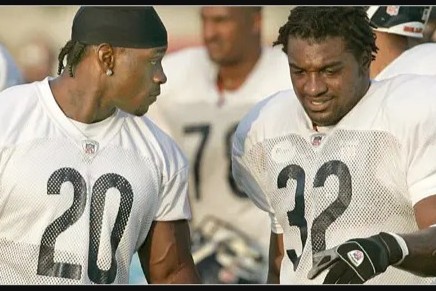
Image via Associated Press (AP)
Last year, the Matt Eberflus debacle — firing the head coach at halftime of a game the Bears were losing badly, one of the most publicly humiliating in-season firings in NFL history — prompted Colin Cowherd and others to name McCaskey among the worst owners in the league. The hiring of Ben Johnson and the emergence of Caleb Williams as a generational quarterback gave Bears fans genuine hope. But ask yourself: why did the Bears suddenly get competent on the field right when the franchise value conversation got interesting? A team with a generational QB, fresh off a playoff run, in a massive media market, is worth considerably more to a potential buyer than a perennial doormat. George McCaskey, whether by accident or design, presides over a franchise at peak valuation — right at the moment the stadium situation threatens to crater it.
He’s not a villain. He’s not clever enough to be a villain. He’s a man in over his head, surrounded by family members who want their money, manipulated by a President running his own agenda, and apparently unable to see that the exit Warren is steering toward leads directly off a cliff. Warren, a man the Big 10 couldn’t shed fast enough
- Kevin Warren’s Long Con
Kevin Warren has been running a masterclass in institutional manipulation since he arrived. His open letter framing the Bears as benevolent private investors who are simply asking for “basic infrastructure” while demanding $850-950 million in public funds was, as one analyst put it, a semantic trick — and it worked beautifully on most of the Chicago sports media.
Now he’s done it again. The Bears were apparently in productive negotiations with Illinois as recently as Wednesday, February 19th — a three-hour session that Governor Pritzker described as “very positive.” The Bears then canceled Thursday’s committee hearing — which, according to Pritzker, was at the Bears’ request — and almost simultaneously dropped a statement praising Indiana’s SB27 as the most meaningful step forward in their stadium history. The blog that covers Springfield politics talks about Pritziker wanting things like affordability in ticket prices so average people can attend, and Warren responds by not showing up to meetings and putting power plays. Maybe Warren will scream “but the Dow is at 50,000!”
That is not negotiating in good faith. That is a man executing a plan while the other party thinks they’re having a conversation.
Whether Warren genuinely wants to be in Hammond or is using Indiana as a gun to Illinois’ head, the damage to the relationship with Illinois is real. And if he actually follows through with Hammond — landfill, refinery, Colts country, blackout rules, and all — then he will have maneuvered George McCaskey into presiding over a historic blunder that will define this franchise forever. And with the gravity of the decision, it’s really forever. The Chicago Bears are destroyed by a guy that was given the lowest approval by Big Ten athletic directors in Big 10 history.
George is handing him the matches. Kevin is already holding the gasoline.

- The Hype Machine: Who’s Driving the Narrative?
Within minutes of the Indiana House Ways and Means Committee vote on Thursday, the Bears media ecosystem lit up like a pinball machine. Ben Devine of @Chicago_NFL — one of the more widely-followed Bears accounts — was declaring “The Chicago Bears are indeed moving to Northwest Indiana” and “Breaking: The Chicago Bears plan to commit $2 billion toward building their new stadium near Wolf Lake in Hammond, Indiana” before the ink was dry, before any site due diligence was complete, before anyone had answered the rather important question of who pays for cleaning up an industrial landfill next to the Midwest’s largest oil refinery.
“Indeed moving.” Not “may be moving.” Not “are signaling a move.” Indeed moving. Done deal. Pack your bags, Chicagoland.
Now, a few questions worth sitting with.
When a media personality with a large Bears following unilaterally declares a franchise relocation a fait accompli based on a committee vote and a carefully worded team statement that doesn’t actually commit to anything — is that journalism? Is it analysis? Or is it something else?
When that same breathless certainty is echoed almost simultaneously across multiple Bears-adjacent accounts, all amplifying the same narrative of inevitability — is that organic reaction? Or does it look, at least a little, like a coordinated pressure campaign designed to make Illinois lawmakers feel like the train has already left the station? It would be fun to look at Devine’s checking account and see if perhaps he’s on the dole.
Who benefits when Bears fans panic-share “they’re definitely leaving” posts that flood Springfield legislators’ inboxes and social feeds? Who benefits when the move feels so inevitable that Illinois is stampeded into a desperate, unfavorable deal — or, alternatively, when Illinois folds entirely and Warren gets everything he wanted?
Here’s what we know: Kevin Warren has already demonstrated that he is willing to use media framing as a negotiating weapon. His “open letter” reframed an $850 million public subsidy ask as a modest request for “basic infrastructure.” The Bears canceled an Illinois committee hearing — at their own request, per Pritzker — and within the same news cycle had a statement praising Indiana ready to go. That is not spontaneous. That is choreographed.
So when the same media cycle that amplifies Warren’s every press release starts declaring the move definitive, based on nothing more than a framework bill that doesn’t even specify financing terms — it’s worth asking who is writing the script, and who is simply reading it.
And this isn’t just a matter of Devine being enthusiastic or credulous. In December, he posted a claim that has since ricocheted across Bears social media as established fact: that Illinois is “demanding” the Bears pay for roads and infrastructure, framing it as something “even more rare” than a team privately funding its own stadium — as if Illinois were the aggressor shaking down a good-faith franchise.
This is not a matter of interpretation. It is factually inverted. It’s a lie and Devine is a liar.
Illinois is not demanding the Bears pay for infrastructure. Illinois is declining to pay $850 million in infrastructure costs for the Bears. Those are opposite things. The Bears chose a site that lacked existing infrastructure — in large part because that’s why the land was cheap — and are asking the state to cover the gap. Illinois saying “we’re not sure we want to spend $850 million on that” is not an unreasonable shakedown. It is a government weighing whether a near-billion-dollar expenditure is in the public interest, especially while taxpayers still owe $350 million on the 2003 Soldier Field renovations the Bears demanded and then abandoned.
Szymanski amplified it. Others amplified it further. By the time it reached the average Bears fan’s timeline, Illinois had been cast as the villain demanding the franchise privately fund its own roads — a cartoonishly unreasonable position that the state never actually took.
That’s how the machine works. Warren frames it. Devine broadcasts it. Szymanski validates it. The myth calcifies into conventional wisdom before anyone checks the receipts.
Devine may be entirely sincere. He may genuinely believe what he posts. But sincerity and accuracy are different things. And a media environment where “Bears insider” accounts race to validate Warren’s narrative without interrogating it — without mentioning the landfill, the refinery, the blackout rules, the Colts fans who didn’t ask for a roommate, the $7-8 billion remediation risk — isn’t covering the story. It’s becoming part of the story.
Bears fans deserve better than hype merchants dressed up as analysts. The franchise’s future is too important to be left to people whose loudest skill is hitting “post” fast.
- FAFO, the MAGA Chorus, and the Ghost of Sweaty Teddy Phillips
Scroll through any Bears stadium comment section right now and you’ll find a particular species of intellectual wildlife repeating the same three syllables with the enthusiasm of someone who just learned what an acronym is: FAFO. Fuck around and find out. Illinois fucked around. Now they’re finding out.
It’s catchy. It’s also historically illiterate, politically motivated, and being fed to the internet knuckle-draggers by people who know exactly what they’re doing.
Let’s start with the history since the FAFO crowd apparently skipped it.
Twenty-plus years ago, the Bears — under their previous CEO Ted Phillips, a man so perspiration-prone that the nickname “Sweaty Teddy” wasn’t even mean, it was just accurate — took the late Mayor Richard M. Daley to the absolute woodshed. The 2002 Soldier Field renovation was a masterpiece of civic fleecing. The Bears got a brand new stadium shell dressed up in the bones of a historical landmark, financed through bonds backed by a 2% Chicago hotel tax. The city and state were told the debt would be manageable. The pandemic gutted hotel revenue. The hotel business never fully recovered. Chicago’s finances, never exactly a model of fiscal health, got worse.
As of early 2024, Illinois taxpayers still owe approximately $589 million in combined principal and interest on that renovation — $375 million in principal, $214 million in interest, with final payment due in 2032. The Bears’ lease at Soldier Field runs through 2033. Meaning: Illinois will finish paying for the Bears’ old stadium approximately one year before the Bears’ legal obligation to play there expires. At which point the Bears will presumably be gone, and Illinois will own a renovated historic venue with no anchor tenant and a $589 million receipt in the drawer.
Sweaty Teddy got his stadium. Stayed on as CEO for decades on the strength of that one negotiating win. And Chicago is still paying for it.
So when Governor Pritzker looks at the Bears coming back to the table with another demand — this time $850 million in infrastructure, a 40-year tax freeze, and a sales tax exemption on construction materials — and says we need to think carefully about this, he isn’t “fucking around.” He is a governor who has watched his state get fleeced once already, who is staring at $589 million in remaining debt from the last time Illinois played ball, and who has some elementary obligation to the taxpayers of his state not to simply bend over and say “thank you, may I have another.”
But here’s where it gets nakedly political. JB Pritzker is widely considered a serious contender for the 2028 Democratic presidential nomination. He’s wealthy, he’s governed a major blue state, and he has ambitions that extend well beyond Springfield. The Indiana Republican establishment — Governor Mike Braun, Speaker Todd Huston, and the rest — know this perfectly well. They are not primarily interested in football. They are interested in handing a potential 2028 Democratic presidential candidate a headline that reads: Pritzker Lost the Chicago Bears.
The FAFO chorus in the comment sections isn’t organic Bears fan outrage. It’s astroturfed GOP trolling with a football spin. Indiana Republicans get to look pro-business, pro-growth, and locally triumphant while simultaneously handing their national allies a weapon to use against a Democrat who might be running for president in two years. The Bears are a prop. Pritzker is the target. And the knuckle-draggers happily typing FAFO into YouTube comments are doing exactly what they’ve been primed to do — generate the appearance of popular momentum for a narrative someone else wrote.
None of them will drive to Hammond to watch a game on a Saturday night in January when it’s 14 degrees and the lake effect snow is coming sideways off Lake Michigan.

Halas Hall convincing Bear fans Indiana is actually part of Illinois
But they’ll type FAFO until their fingers fall off, because that’s free, and it’s fun, and someone upstream from them is very pleased that they’re doing it.
Pritzker isn’t a villain in this story. He’s a governor who looked at $589 million in outstanding debt from the last time Illinois gave the Bears what they wanted and concluded — reasonably — that the state should negotiate rather than capitulate. The fact that his political opponents have successfully reframed “fiscal responsibility” as “fucking around” is a testament to how completely Warren’s narrative operation has colonized the discourse.
Sweaty Teddy would be proud.
- Illinois Isn’t Blameless
To be fair — and fairness requires acknowledging this — Illinois has been a willing participant in its own humiliation. Pritzker treated this as anything but a priority. The state’s response to years of Bears negotiations has been the governmental equivalent of “yeah, we’ll get to it.” The commercial property tax situation in Illinois is genuinely hostile to major development. The Arlington Heights deal dragged on for three years without resolution.
But none of that changes the fact that the Bears are now seriously contemplating building a $7+ billion stadium complex on an industrial landfill next to a refinery, in a state that has one NFL team already, financed by a public investment structure that is functionally identical to the deals they claimed were unworkable in Illinois — except with substantially more geological and environmental risk.
Illinois failed the Bears. The Bears are about to fail themselves.
- The NFL Should Step In — And Chicago Should Play Hardball
Here is something that has gone almost entirely undiscussed in the breathless coverage of Hammond’s “once-in-a-generation opportunity”: the NFL has a vested interest in this deal not happening, and Roger Goodell should say so loudly.
The Chicago market is one of the most valuable in American sports. The Chicago Bears brand — one of the league’s founding franchises, the Monsters of the Midway, the team of Butkus and Payton and Urlacher — derives enormous value from its association with that city. Moving the franchise 18 miles across a state line to a landfill adjacent to a BP refinery in Hammond, Indiana does not make the Chicago Bears more valuable. It makes them a regional curiosity with an identity crisis, competing for attention in a market that now has to share its NFL loyalties with the Indianapolis Colts, who did not ask for a roommate and whose fanbase has been notably unenthusiastic about the prospect.
The league has intervened in stadium situations before. It has influence over where franchises land and how deals are structured. If the NFL is serious about protecting franchise values — and it is, because franchise values are the foundation of every owner’s net worth and every TV deal ever negotiated — then Goodell should be on the phone with Warren and McCaskey telling them that Hammond is not an acceptable outcome for one of the league’s flagship franchises.
But let’s say the league stays quiet, and Warren gets his way. Here’s a card Chicago hasn’t played yet, and should:
The city of Chicago owns the name.
Not legally, perhaps — trademark law is complicated and the Bears have held their marks for decades. But politically and culturally, “Chicago Bears” belongs to Chicago the way “New York Yankees” belongs to New York. If the Bears relocate to Hammond, Indiana, the city of Chicago should immediately and loudly challenge the franchise’s right to continue using the Chicago name. File the legal motions. Make it expensive. Make it embarrassing. Force the NFL and the Bears to litigate in public whether a team playing in Hammond, Indiana gets to trade on the identity and history of a city it just abandoned.

The Hammond Bears.
Say it out loud. Let that land. Think that works for Rodger Goodell? I don’t fucking think so.
Under NFL blackout rules, once the team plays in Hammond, Chicago is no longer the home market. The city cannot be blacked out for games that don’t sell out. Bears fans in Chicago — the actual Bears fans, the ones who grew up with this team, who remember the ’85 season, who endured decades of McMahon and Grossman and Cutler and the rest — will watch from their couches while a stadium built on an industrial landfill in Indiana fills with Indiana residents who six months ago had no interest in the Chicago Bears.
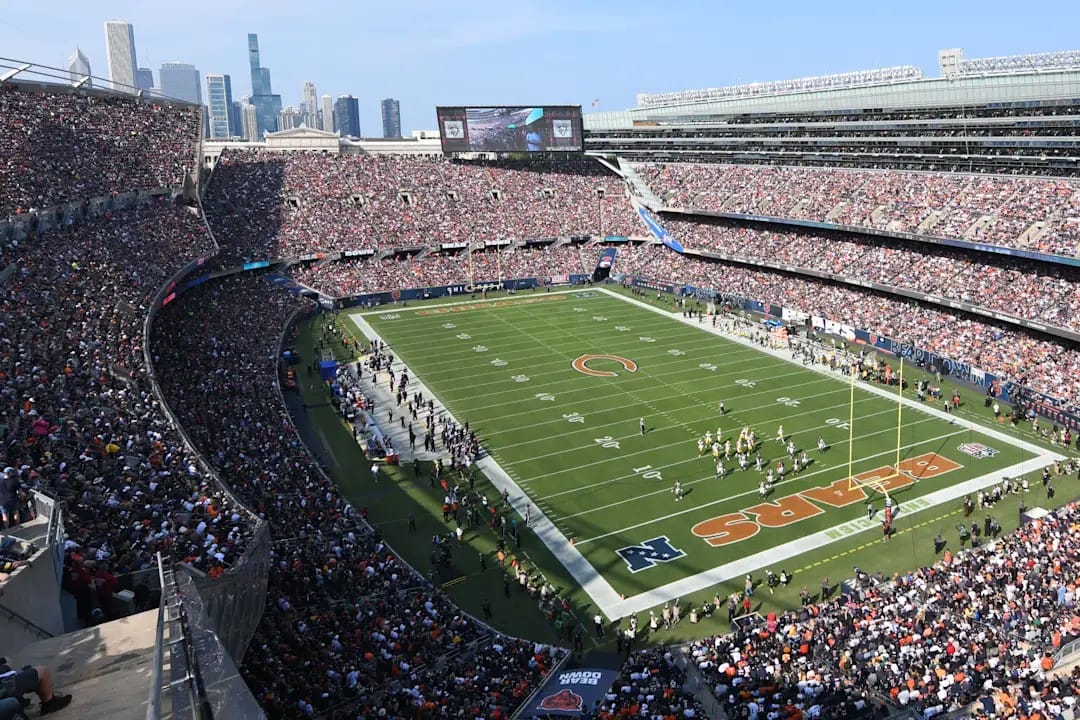
The Hammond Bears. Playing in a dome next to the BP Whiting Refinery. In a city with a population of 70,000. Trying to sell out a 60,000-seat stadium to a fanbase that mostly lives in a different state.
Roger Goodell should be embarrassed that this conversation is even happening. And if it happens, Chicago should make sure the NFL feels every inch of it.
Illinois still has until May 31st to pass legislation. It’s a long shot. The Bears, having now publicly and effusively praised Indiana and called SB27 the most meaningful step forward in their stadium efforts to date, would take a significant credibility hit by pivoting back to Springfield.
But meaningful step forward toward what, exactly? Toward a dome on a landfill next to the BP Whiting Refinery, in a city that borders Chicago but is definitionally not Chicago, in a state that didn’t ask for a second NFL franchise and whose existing NFL fanbase isn’t thrilled about sharing?
Bears fans deserve better than this. Caleb Williams deserves better than this. The franchise, at this particular moment in its history, has more on-field promise than it has had in decades.
And Kevin Warren appears to be steering it directly into Wolf Lake.
George McCaskey, for his part, will probably be surprised when it happens.